



Western White Honeysuckle
- Shipping Available
Lonicera albiflora
Common Names include Western White Honeysuckle, White Shrub Honeysuckle, White Bush Honeysuckle, White Limestone Honeysuckle, Texas Honeysuckle, White Honeysuckle
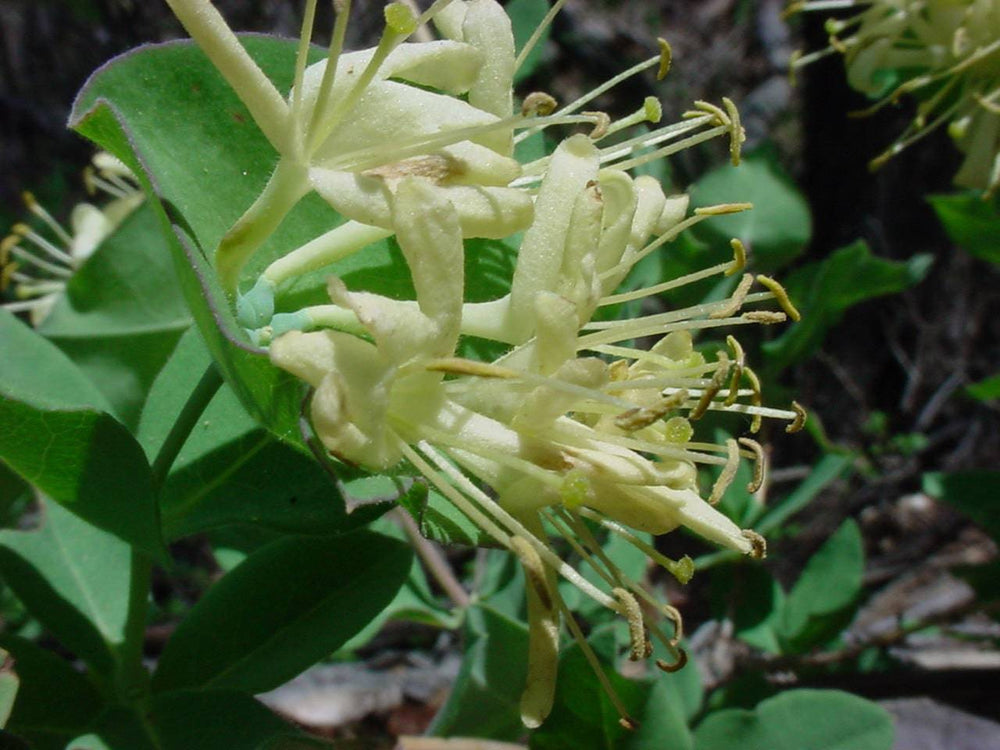
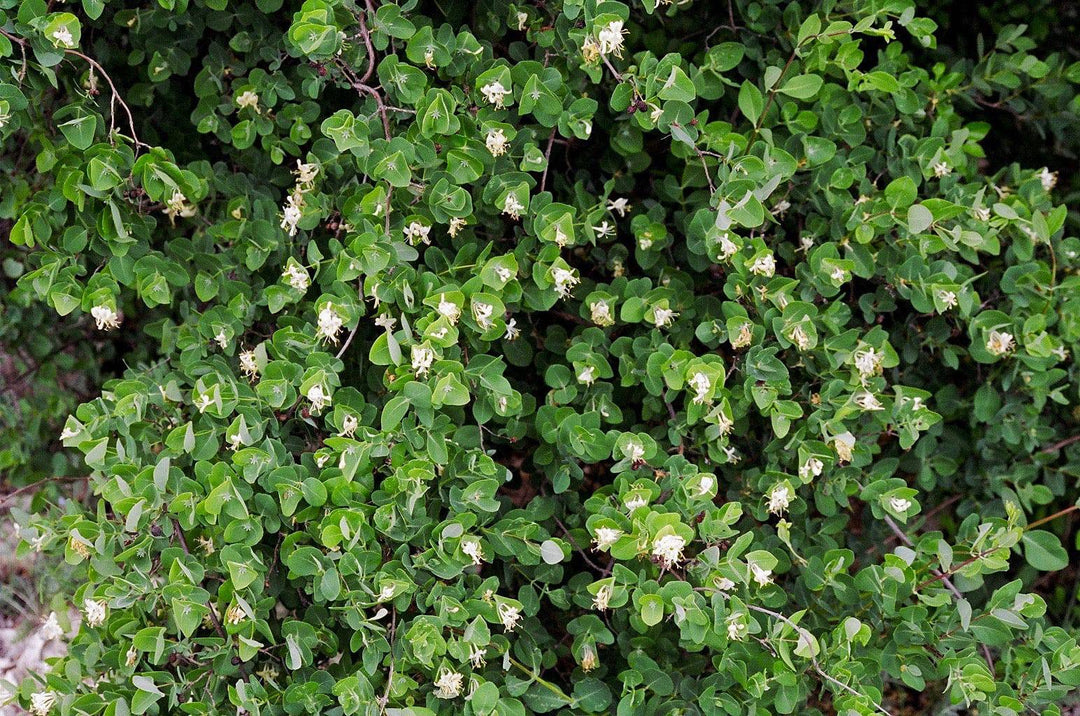
A lovely deciduous twining shrub or woody vine, Western White Honeysuckle usually grows to about 4' tall but can reach heights of 10' tall. Showy, white flowers bloom in 2-3 in. cluster at the ends of the branches and are followed by clusters of orange-red berries that birds love to snack on. The berries are mildly toxic to humans. Its flowers provide nectar to native bees and butterflies.
This plant climbs walls and columns without the aggressive tendencies of Japanese honeysuckle. It can be pruned for shape or left wild if preferred to grow as a shrub. It is native to rocky slopes and cliff edges in Central Texas north to Oklahoma, west to Arizona, and south to Mexico. Western White Honeysuckle prefers rocky or sandy soils, and needs some supplemental water in full, hot sun.
BONAP MAP
Height: 4’-10’
Spread: 4’-10’
Bloom: March-May
Light: Full Sun-Part Shade
Water: Low-Medium
Zone: 7-10
Origin: Texas, Oklahoma, New Mexico, Arizona, Mexico
Spring Shipping:
Orders are shipped within 10-15 business days. We will email you if there are expected delays.
When you order plants from our nursery, you can expect them to arrive in the best possible condition. Our team carefully packs each order using sturdy, biodegradable packaging materials.
Your plants' appearance may vary depending on the season and their current growth stage. We may cut back the leafy growth of some plants to prepare them for shipment and transplanting.
5 Gallon and Up: Any plant purchased to ship over 5 Gallons will be shipped bare root. This means we will remove the plant from its original pot, remove the soil surrounding the roots, and wrap the roots with a biodegradable plastic bag. This reduces weight and the likelihood of damage during shipping.
Once your plants arrive, it is essential to plant them as soon as possible. This will help them rebound and thrive. If you cannot plant immediately, water regularly and keep the roots off heat-conducting surfaces.
Newly transplanted plants often require more water until their roots are well established. Plan to water them 1-3 times weekly for the first few months.